

When investors talk about Greece today, they are no longer whispering about bargain hunting after a crisis. They are talking about record key prices, a maturing hotel market, and a region where the easy “early-cycle” money has already been made.
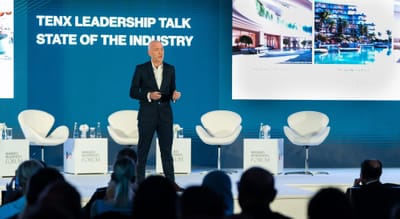
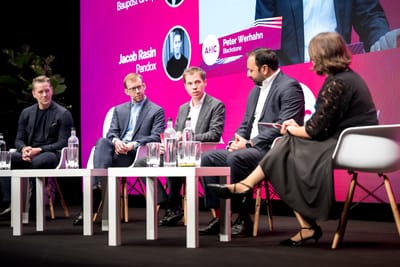
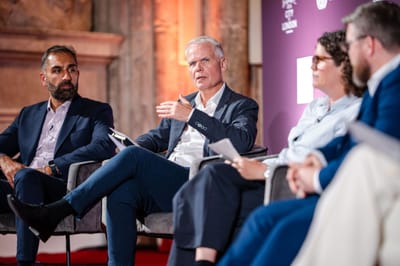
At Future Hospitality Summit Dubai 2025, the panel “Capital, Coastlines & Control: The Eastern Mediterranean Investment Map for Owners” brought that reality into sharp focus. On stage:
- Elie Milky, Chief Development Officer, Middle East, Northeast Africa, Cyprus and Greece, Radisson Hotel Group
- Dimitris Manikis, President EMEA, Wyndham Hotels & Resorts
- Moderator: Judith Cartwright, Founder and Managing Director, Black Coral Consultancy
The conversation centred on Greece, Cyprus, Turkey and Egypt, with Albania and Croatia increasingly in the mix. The message for owners and investors: the post-GFC fire sale is over, but the structural story is far from finished.
From ATMs and capital controls to “the place to be”
For Manikis, the starting point is personal. As a Greek, he remembers queuing at ATMs with his family, limited to about €60 per day at the height of the crisis.
“We should never forget those days and how long it has taken us to be where we are today. Today, we have one of the strongest GDPs in Europe, and we have become the place to be from an investment perspective in hospitality.”
That journey matters for understanding where we are in the cycle:
- Post-GFC early-cycle investors came into Greece and the wider Eastern Med when assets were distressed and political risk was front and centre.
- Those funds are now at or beyond the classic seven-year hold period, and they are exiting.
- New capital is buying at much higher bases, as shown by headline deals like the Grand Hyatt Athens trade, which Manikis cited at around €450,000 per key, a record for Greece.
The risk now, he warned, is that owner price expectations detach from reality:
“If he got 450, I can get 500, and then deals will not happen.”
In other words, the early-cycle window of depressed, post-crisis pricing is gone. Today’s opportunity is about riding structural growth, not harvesting systemic mispricing.
Greece and Cyprus: peak or platform?
Milky pushed back on the idea that “peak” automatically means “no upside”:
“In a place like Greece and Cyprus, the market may be peaking, but that does not mean it is peak and that does not mean it is the end.”
The core of his thesis is brand penetration:
- Greece has roughly 10,000 hotels. By Milky’s estimate, only about 1 percent are internationally branded.
- Cyprus shows similarly low brand penetration and is at the bottom of the Mediterranean league table compared with Turkey, Italy and Spain.
This is why both Radisson and Wyndham have expanded so aggressively:
- Radisson has grown from one hotel in Greece in 2019 to nearly 15 today, with more openings planned, plus two operating hotels and three under development in Cyprus, making it the largest international developer on the island.
- Wyndham now has well over 100 hotels in Turkey and a strong pipeline across the region.
The fundamentals behind that growth are what sustain the story beyond the early cycle:
- Stronger GDP performance in Greece compared with many core EU economies.
- Banks in Greece and Cyprus that are once again ready to lend at still-attractive rates.
- A deep pool of family-owned hotels whose younger generation either does not want to run the assets or wants more “internationality”.
That generational shift is what has opened the door to Hilton, Marriott, Radisson, Wyndham and their peers. Greece is no longer merely a land of “Maria’s Rooms” and “Panagiota’s Resort”. It is becoming a maturing, brand-driven market.
Diverging risk: Greece and Cyprus vs Turkey and Egypt
One of the clearest messages from Milky was that the Eastern Med is not one homogenous risk bucket:
- Greece and Cyprus are attracting both local and foreign capital, supported by functioning credit markets, EU backing and improving infrastructure.
- Turkey and Egypt are still heavily local-capital driven because of currency volatility and very high interest rates, often in the 30 to 40 percent range, which make bank borrowing uneconomic.
“That is why it is a very, very local market there.”
In Turkey, multi-property white-label operators dominate, with franchising playing a major role. In Egypt, local developers and branded residences frequently drive hotel projects. In Cyprus, the investor profile tilts more towards developers and funds.
For owners and investors, this means:
- A European-style, bank-financed, institutional play in Greece and Cyprus.
- A more equity-heavy, relationship-driven, local-partner model in Turkey and Egypt.
Overlay this with geopolitical fragility, and you get Manikis’ own stance:
“Cautiously optimistic, riding the wave as it happens, but always remembering that anything can happen in the region that can really change the momentum.”
Follow the planes: extending the season to 12 months
If the early-cycle play in Greece was simply “things are cheap”, the next-cycle thesis is seasonality.
Manikis is blunt about how he tracks opportunity:
“Every month I get the new routes of airlines to see where the new big thing is. Follow the planes. Wherever the planes go, that is where development is going to happen.”
Two things are happening simultaneously.
- Infrastructure catch-up
- Major upgrades to airports, highways and other infrastructure mean Greece is finally behaving like a 21st century country in terms of access.
- New and expanded airports, including secondary islands such as Paros, are transforming destinations from three month to five month seasons and beyond.
- Season extension and product diversification
- Athens has shifted from a stopover to an all-year lifestyle city, with gastronomy, events and wine tourism making August, when locals leave, its slowest month.
- Islands like Santorini have seen their seasons stretch from about five to six months toward seven months, while secondary islands such as Paros and Naxos are seeing increased attention as travellers move away from the most saturated destinations.
- Manikis points to mild winters, mountains and roughly 340 days of sun as the basis for a credible 12 month offer, reinforced by moves such as TUI’s decision to fly to Greece year-round.
For owners, the shift from a three to five month season toward seven to twelve months changes everything: underwriting, staffing, capex planning and the viability of more diverse product such as MICE, wellness, medical tourism and mountain resorts.
Sustainability: from panel buzzword to bank requirement
Pre-COVID, every conference agenda seemed to be “millennials and sustainability”. Post-COVID, Manikis worries the conversation has moved on to AI and tech at the expense of ESG:
“That to me is worrying. From a hospitality perspective, we have a duty of care to the next generation to deliver more than we take.”
His argument is that sustainability is now anchored not just in conscience, but in commerce:
- Consumers increasingly rate hotels on environmental and community impact, and this feeds directly into online reputation and pricing power.
- Banks are pushing green loans, with better terms for projects that meet sustainability criteria.
- Governments are offering incentives for sustainable development.
- Brands like Wyndham and Radisson are hard-wiring ESG into operations, from solar panels and energy solutions in properties like those in Larnaca through to water treatment, waste management and plastic reduction.
Milky summarised it along these lines: you are more likely to get a loan if you have a sustainable development, governments are introducing initiatives, and consumers are demanding responsible business, so sustainability sits at the core of every credible development plan.
In a region where the “product” is coastline, climate and nature, ignoring ESG is effectively a strategy to erode the very asset you are monetising.
Mid-market, all-inclusive and branded residences: where the volume really is
Asked about 2030, ultra-luxury and all-inclusive, both speakers were clear: luxury is glamorous, but mid-market is where the money is.
Milky:
“There is a market for ultra-luxury, but it is a small niche. The bulk of the business and the bread and butter is where we operate, budget, mid-scale, upscale, upper-upscale.”
Manikis added context:
- Luxury is maybe 10 to 12 percent of global demand.
- For the first time, the next generation in Europe is likely to be poorer than their parents. Many young adults cannot afford their own apartment, let alone €1,000 per night rooms in Rome.
His line that “travel is a human right” and that travel should be “inclusion, not exclusion” underpins Wyndham’s focus on the middle-class segment in both hotels and branded residences.
On branded residences, both brands are playing, but cautiously:
- Wyndham is active in mid-market private residences, but Manikis stresses the reputational risk: “Someone is selling, using your name, for you, without you.”
- Radisson typically only does branded residences where there is a hotel component on site to provide services. Standalone schemes are the exception, not the rule.
What “the early-cycle window is gone” really means for owners
When we say the early-cycle window is gone, we mean:
- You are not buying at crisis-level discounts.
- Price discovery is happening at higher levels, exemplified by record key prices in Athens.
- Competition now comes not just from distressed buyers, but from global brands, funds, family offices and local developers who are all working inside a more normalised macro environment.
The panel also made it clear that this is not “late-cycle, game over”:
- Brand penetration remains extremely low in Greece and Cyprus.
- Airlift, infrastructure and seasonality are structurally improving, turning three month plays into seven to twelve month businesses.
- ESG and mid-market demand will keep reshaping product and financing, opening new angles for owners who can deliver the right hardware and operating models.
The arbitrage has shifted from “cheap capital versus scared sellers” to “smart capital versus slow product”. Owners who treat Greece, Cyprus, Turkey and Egypt as if they were still in 2010 will miss where the real edge is now.
Key takeaways for owners and investors
- The distress play is over, the structural play is on. Early post-GFC buyers are exiting. New entrants are paying higher prices but buying into stronger GDP, better credit conditions and maturing hotel markets.
- Greece and Cyprus are still under-branded. With roughly 1 percent of 10,000 Greek hotels under international flags and similarly low penetration in Cyprus, there is meaningful room for further brand growth even if yields compress.
- Country risk is not uniform. Greece and Cyprus offer bankable, EU-anchored stories. Turkey and Egypt are more local and equity-based, with very high interest rates and FX risk making traditional bank debt challenging.
- Follow the planes and the months. Airlift and infrastructure upgrades, plus climate and product diversification, are turning the Eastern Med from a three month summer story into a credible seven to twelve month proposition in many locations.
- Mid-market and all-inclusive will carry the volume. Ultra-luxury will remain a niche. The bulk of sustainable income lies in budget to upper-upscale, with careful, reputation-aware use of branded residences.
For our readership of owners, lenders and developers, the Eastern Mediterranean is no longer a contrarian bet on recovery. It is a test of who can handle cycle-aware pricing, longer seasons, real ESG and middle-class demand better than the competition, because the region’s next decade will belong to those who can.
Subscribe to our newsletter.
Become a subscriber receive the latest updates in your inbox.